Looking for low-cost hospital software? Here is what really drives the price, and how small hospitals can get affordable software that does not cost more later.
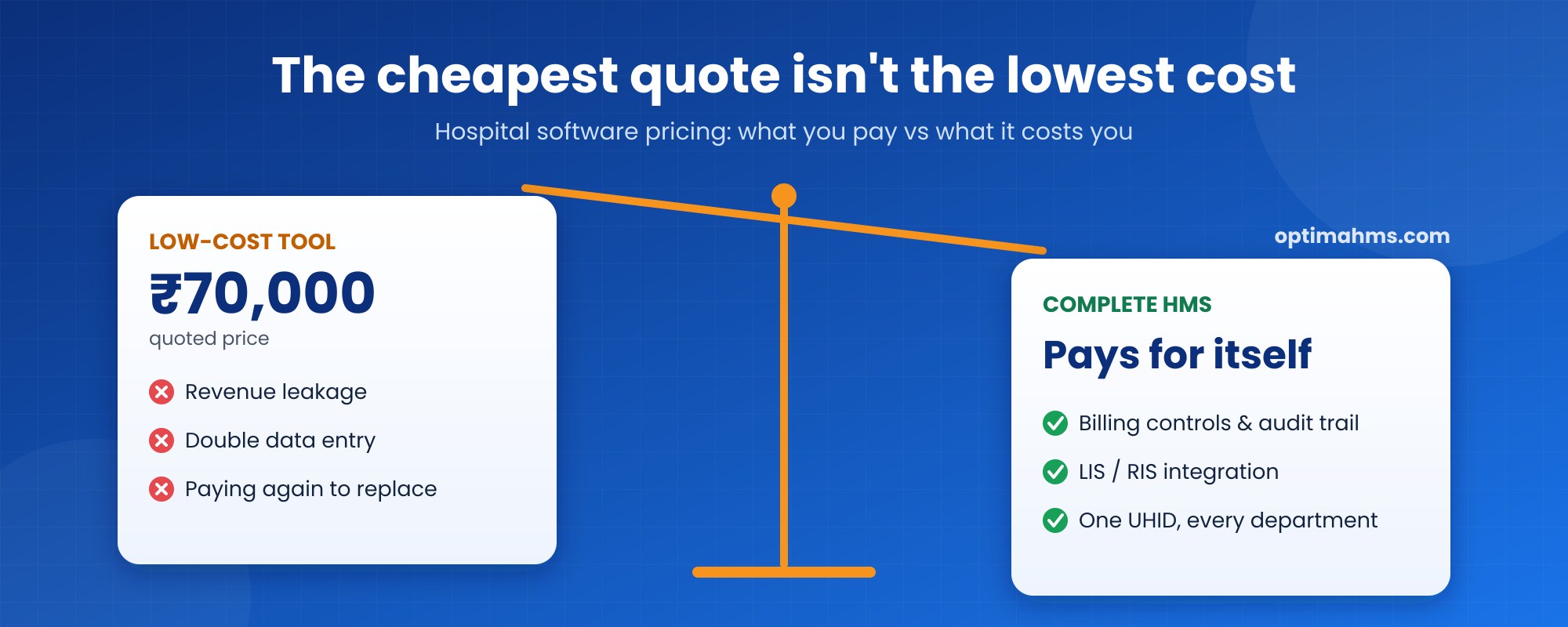
Two quotes land on the hospital administrator’s desk. One is ₹70,000. The other is ₹6 lakh. Both call themselves “hospital management software”. The decision looks easy, and that is exactly the trap.
Hospital software prices in India range widely because the products behind them are very different. One is often a billing tool with patient records attached. The other runs the whole hospital: billing, OPD, IPD, lab, radiology, pharmacy and accounts, with controls that stop money leaking out of the building. If you are searching for low-cost hospital software, or “cheap and best” hospital software for a small hospital or nursing home, this guide explains which features actually drive the price, what you can safely skip, and why the cheapest quote is rarely the cheapest choice.
Price follows scope. A low-cost package usually covers registration, a basic bill and a few reports, installed with little help and left for your staff to figure out. A complete hospital management system (HMS) for a 50 to 600+ bed hospital has to connect every department to one patient record, control who can change a bill, talk to lab analyzers and imaging systems, and come with proper training and go-live support.
Five things decide most of the price:
This is where cheap software saves money for the vendor, not the hospital. Look for role-based permissions, discount approval rules, tariff and package management, and a user-wise audit trail that shows who changed which bill and when. Without these, revenue leaks quietly through unapproved discounts, edited bills and services that never reach the invoice. See how our billing and accounts module handles this.
Bi-directional lab analyzer interfacing sends orders to the machine and brings results straight back into the patient file, with no retyping. On the imaging side, RIS workflow with DICOM interfacing to PACS through third-party services keeps radiology orders, reports and billing in step. Low-cost tools rarely offer either, so staff enter the same results twice and some tests never get billed.
When OPD, IPD, lab, radiology and pharmacy each keep their own records, nobody sees the whole patient. A single UHID means the doctor sees earlier reports and prescriptions at follow-up, and the final bill picks up every service the patient received.
A detailed EMR with follow-up tracking, digital prescriptions and OT management turn the software from a cash counter into a clinical system. These modules also make audits and accreditation far easier.
Most Indian hospitals bill cash, TPA, corporate and government scheme patients at the same time, each on different packages and rates. Software that cannot keep these apart leads to wrong bills, rejected claims and slower discharges.
The licence is only part of the job. A proper rollout includes a workflow study, tariff and user-role setup, department-wise training and a parallel run before go-live, followed by SLA-based support. Cheap software often ships with a login and a phone number. Read how a structured HMS implementation works.
| What you need | Typical low-cost tool | Complete HMS |
|---|---|---|
| Bill edit and discount control | Limited or none | Approval rules and user-wise audit trail |
| Lab and radiology | Separate systems, manual entry | Analyzer interfacing and RIS/PACS linkage |
| Patient record | Split by department | One UHID from OPD to discharge |
| Scheme, TPA and package billing | Handled on paper or spreadsheets | Separate packages and rate charts per payer |
| Training and go-live | Minimal | Department training and parallel run |
| Accreditation readiness | Records hard to trace | Traceable records and audit trails |
The cost of hospital software is not the quote. It is the quote plus everything the software fails to stop. The biggest hidden costs are:
A simple illustration: imagine a 100-bed hospital billing ₹1.5 crore a month. If just 1% slips through uncontrolled discounts and unbilled services, that is ₹1.5 lakh a month, or ₹18 lakh a year. That one gap can cost more than the difference between a cheap tool and a complete HMS. Your own numbers will differ, but the logic holds: controls pay for themselves.
Small hospitals and nursing homes do need to watch the budget, and they do not need every module on day one. “Low cost” should mean a lower first investment, not missing the controls that protect revenue. Affordable hospital management software for a small hospital should still give you:
The cheapest software usually fails on these points. A good low-cost option gets them right and lets you start small.
The best value hospital software is the one with the lowest total cost over five years: licence, training, support, and the revenue it protects. Judge it by that, not by the first quote. See what drives OptimaHMS pricing on our hospital software pricing page.
Instead of comparing licence prices, compare the total cost over five years. Ask every vendor:
OptimaHMS implementations start from ₹5 lakh. The final price depends on the modules you choose, your bed strength, cloud or on-premise deployment, and the integrations and data migration you need. Every implementation includes a workflow study, tariff and role setup, department-wise training, a parallel run before go-live and 24/7 SLA-based support.
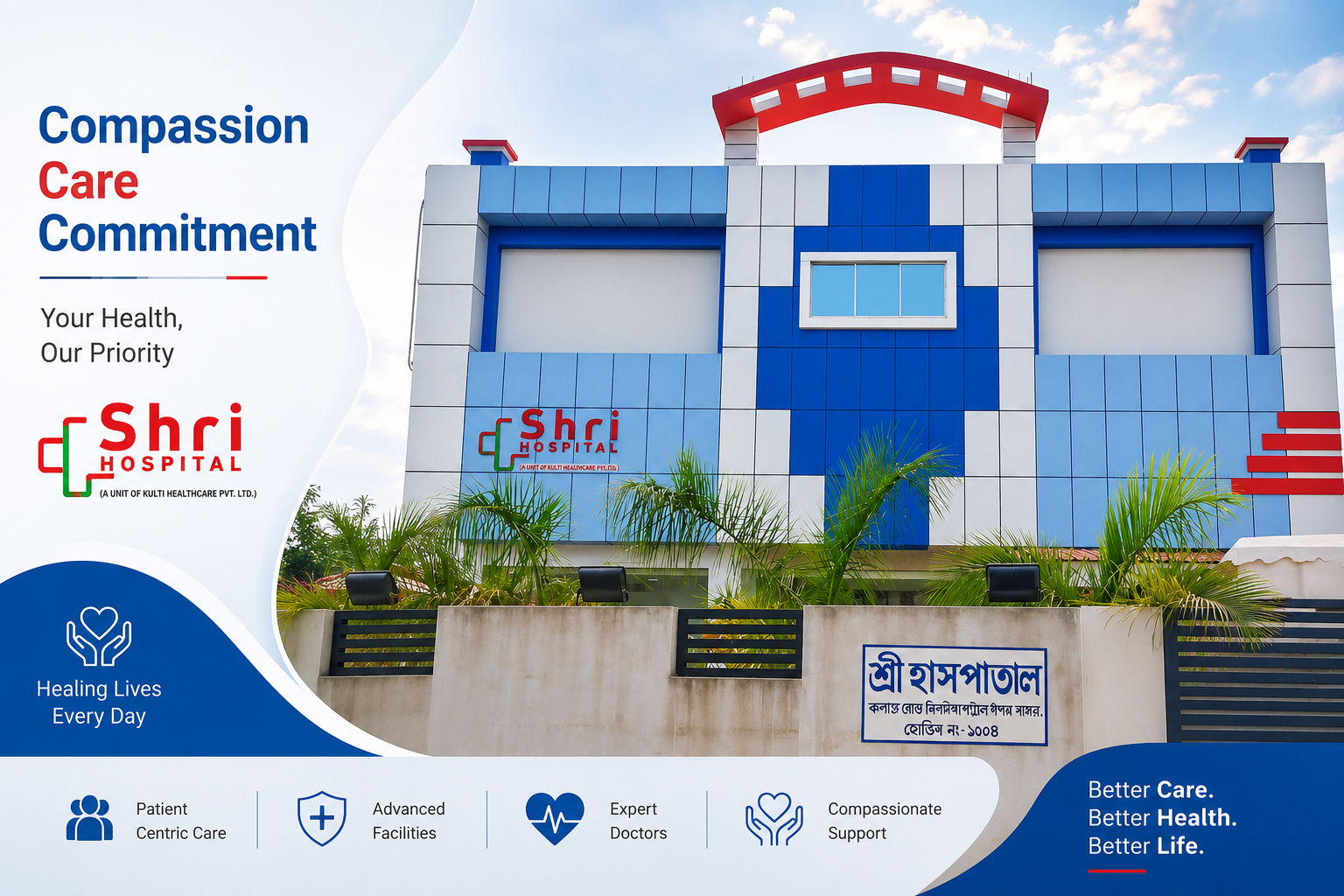
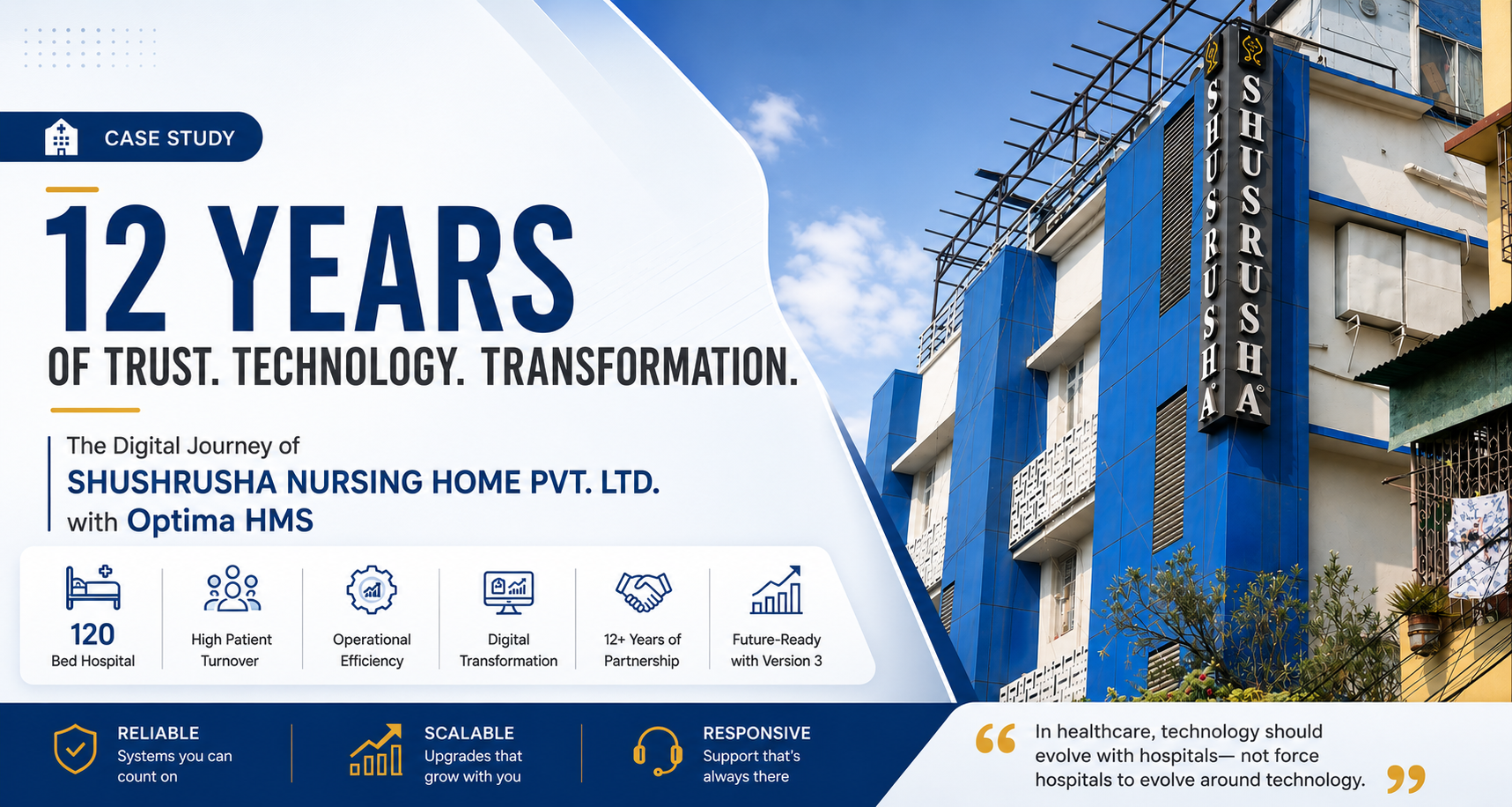
You do not have to buy everything at once. Many hospitals start with Billing & Accounts to control revenue first, then add LIS, RIS, pharmacy and clinical modules as they grow. Hospitals such as Sri Hospital, Kulti have run on OptimaHMS for years and reached NABH entry-level accreditation on it. See our case studies and our guide to NABH-ready hospital software.
Prices range from around ₹70,000 for basic billing tools to several lakh for a complete HMS. OptimaHMS starts from ₹5 lakh, depending on modules, bed strength, deployment and integrations.
It can work for very small clinics. For hospitals with 50 or more beds, in-house diagnostics and scheme or TPA patients, the missing controls usually cost more than the savings.
Look for software that starts with an affordable billing module, includes discount control, an audit trail and one UHID per patient, and lets you add lab, radiology and pharmacy later. OptimaHMS is built for hospitals from 50 beds upward and can start with Billing & Accounts only.
Yes. Nursing homes with 50 or more beds can start with billing, OPD and IPD, run on the cloud to avoid server costs, and add modules as they grow.
Yes. Starting with Billing & Accounts keeps the first investment lower, and other modules can be added module by module.
It depends on your IT setup and connectivity. Cloud reduces server and maintenance costs; on-premise suits hospitals that want local control. OptimaHMS supports both.
See the factors that shape your price on our hospital management software pricing page, or book a demo and we’ll walk through the modules your hospital actually needs.
See the modules your hospital actually needs, and what they cost.
Fill out the form below, and we will be in touch shortly.